%20(1)_edited.png)

Online and In-Person Conference in Stratford-upon-Avon
Thursday 18th - Saturday 20th June 2026
2026
BritGrad
Conference
Theme
Shakespeare Under the Microscope:
Surveillance, Observation, and Forensic Analysis
Across Shakespeare’s works and the wider early modern period, acts of watching, being watched, monitoring, and interpreting, shape the social, political, and theatrical landscapes. From the intimate scrutiny of lovers and rulers to the public gaze of audiences and authorities, surveillance - both overt and covert - structures relationships, knowledge, and power.
BritGrad 2026 explores how surveillance, observation, and systems of knowledge operate within the early modern world and its afterlives.

Why Surveillance?
At first glance, surveillance might feel like a familiar or even well-trodden theme. So why this theme, and why now?
The 2026 BritGrad Committee sees surveillance not just as a theme within Shakespeare's works, but a mode of investigation for Shakespeare studies itself. A mode shaped by, and responding to, an increasingly surveillance-conscious modern world. Every moment in time reshapes the world we live in, and with each cultural, political, and technological shift we are compelled to return to Shakespeare and re-examine his work through new lenses. 'Surveillance' is not a static theme but evolves with us.
Shakespeare’s plays are saturated with acts of watching, spying, overhearing, and perceiving. Characters observe one another in secret and in public; rulers monitor subjects; lovers watch and are watched; bodies and behaviours are scrutinised for evidence, guilt, or truth. From the comic misunderstandings of Love’s Labour’s Lost to the darker, more sinister implications of surveillance in plays such as Cymbeline, Shakespeare repeatedly explores who has the power to watch, who is rendered visible, and what is at stake when observation becomes control.
Theatre itself is a space of surveillance. Characters watch other characters; audiences watch the action unfold; and the plays often draw attention to this layered act of looking. Shakespeare’s drama is profoundly meta-theatrical, constantly reminding us of who controls the gaze - who is watching, who is being watched, and how meaning is produced through acts of observation.
As scholars, practitioners, and audiences, we add yet another layer. Shakespeare studies is itself a form of surveillance: close reading, forensic textual analysis, performance criticism, archival work, and theoretical approaches all place texts, characters, and the early modern world under continual examination. Gender studies, race studies, queer theory, disability studies, and other critical frameworks have transformed how we read Shakespeare, revealing new meanings and raising new questions. The playwright’s work remains slippery, unstable, and productively open - a kaleidoscope of perception that shifts with each new lens.
Surveillance also feels newly urgent in our contemporary world. The 'Big Brother' motif may no longer feel novel, but it remains deeply relevant as digital technologies, data cultures, and political monitoring become increasingly embedded in everyday life. Modern productions frequently incorporate video technology, live-feed cameras, and digital monitoring, making surveillance almost a theatrical norm. Shakespeare is not only a writer who explored surveillance, but a playwright whose work is continually re-surveilled within an increasingly surveilled world.
By choosing this theme, we wanted to create space for delegates to think expansively and personally about what surveillance means to them - whether within Shakespeare’s texts, within performance practices, within critical methodologies, or within contemporary culture. From 'ocular proof' and evidentiary seeing, to forensic close analysis, audience surveillance, and Shakespeare under the microscope of modern theory and technology. This theme invites a wide range of interpretations while encouraging participants to engage deeply and critically with the brief.
Ultimately, Shakespeare Under the Microscope reflects what BritGrad values most: ongoing re-examination, interdisciplinary thinking, and the excitement of discovering new ways of seeing. Each passing second redefines our world and with it, the questions we ask of Shakespeare. This theme acknowledges that process and celebrates the vitality of a field that, although rooted in the past, is consistently moving forward.
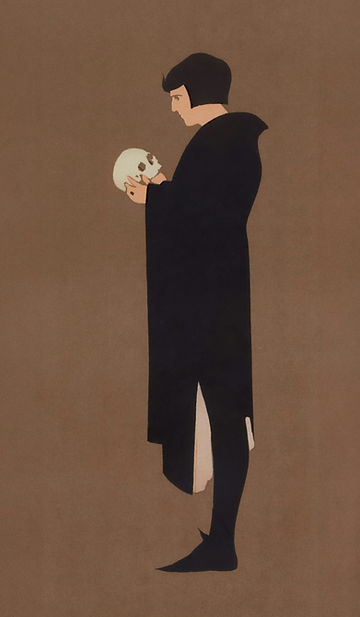
Our committee extensively discussed the theme, providing potential prompts for delegates and auditers alike:
-
How do new modes of investigation shed light on the early modern world?
-
Who is being put underneath the microscope in Shakespeare’s works/the early modern world?
-
Who is using, and how is the microscope used in Shakespeare’s works?
-
How can we analyse Shakespeare’s works through different gazes?
-
How are modes of looking shaped in Shakespeare studies?
-
Why should Shakespeare continue to go under the microscope?
-
How do we discern deception versus perception in
these fields?
-
How do scholars/practitioners interrogate text/performance to reveal things that may otherwise remain unseen?